
Ordinary people doing extraordinary things
-
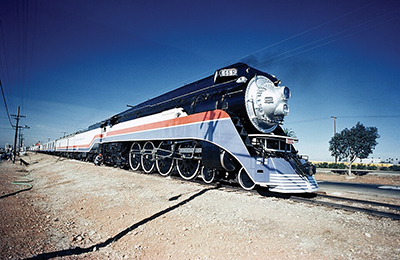
The 1975-1976 American Freedom Train made a cross-country journey to Washington, D.C., celebrating our nation’s Bicentennial. - Photo submitted
-
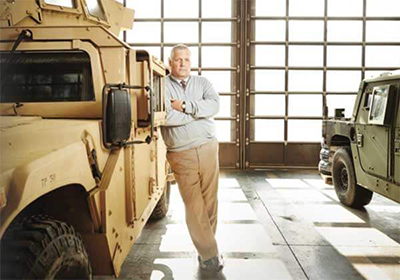
Tim Eichhorn spent the first eight years of his career serving our country as an officer in the U.S. Marine Corps. - Photo submitted
-
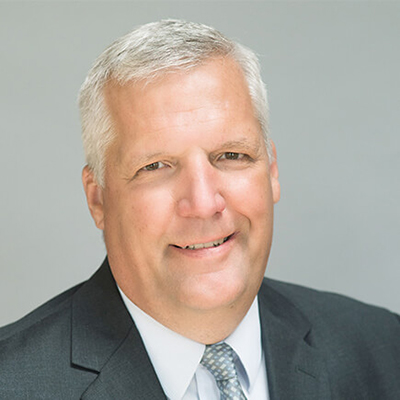
Tim Eichhorn, partner and senior advisor with Rather & Kittrell - Photo submitted
Fifty years ago exactly, during the week leading up to July 4, 1976, the American Freedom Train stopped in Cumberland, Maryland, on June 29 and 30 as its 93rd stop on a cross-country journey to Washington, D.C., celebrating our nation’s Bicentennial.
Dad came home at lunchtime on that June 29 and took 10-year-old me to see the train.
Spread across 26 railcars was a representation of the most remarkable two centuries in human history.
At no other time had so much happened so quickly. A nation founded through revolution and upon entirely new principles had spanned a continent-sized frontier. Its people became individuals of almost mythic proportion—answering to no king who claimed authority by birthright. Instead, Americans claimed their own birthright as free people. They set forth as trailblazers in canoes on unknown waters, then as woodsmen, settlers, gold seekers, buffalo hunters, cattlemen, farmers, inventors, and industrialists.
The display cars contained more than 500 treasures of Americana. Among them were George Washington’s copy of the Constitution, the original Louisiana Purchase document, Judy Garland’s dress from The Wizard of Oz, Joe Frazier’s boxing trunks, Martin Luther King Jr.’s pulpit and robes and even a rock from humanity’s recent journey to the moon.
I remember that my father had concerns about the direction of the country, even as the Bicentennial celebration was building toward a fever pitch. Perhaps he and many other adults of that era had momentarily lost sight of the moral and material strength of a nation that had helped win two World Wars, resisted those bent on global domination, and expanded the cause of freedom around the world.
Perhaps all they could see was what appeared daily in newspapers and on the evening news. The lingering wounds of Vietnam and the fallout from Watergate created a sense of uncertainty that threatened to overshadow America’s enduring promise.
Maybe we feel something similar today as we approach the 250th anniversary of this great American experiment.
Yet I believe there is good reason to look beyond the frustrations of the moment and focus instead on the character, principles and aspirations that have carried this nation forward for two and a half centuries. America is not perfect. It never has been. It is a nation built and sustained by imperfect people. Yet it continues to serve as a beacon of hope for those around the world who long for freedom, opportunity and a better future. Even today, much of the world still looks to the United States for leadership.
Ten-year-old me stood in awe of what I saw on that train. Sixty-year-old me still believes.
But belief alone is not enough. Every generation is called to preserve, strengthen and pass forward what it has inherited. The freedoms, opportunities and institutions we enjoy today did not appear by accident; they were built through sacrifice, responsibility and service.
As we celebrate 250 years of America, perhaps the best way to honor those who came before us is not merely to reflect on their achievements but to contribute our own. We can invest in our families, serve our neighbors, strengthen our communities, support worthy causes and leave our corner of the world better than we found it.
The American story has always been written by ordinary people who chose to do extraordinary things in their own homes, businesses, churches, schools and towns. The next chapter is ours to write.
Tim Eichhorn manages corporate and personal assets for clients of Rather & Kittrell. Tim joined Rather & Kittrell in 2004 after spending the first eight years of his career serving our country as an officer in the U.S. Marine Corps and then nine years in consulting and non-profit work. He spent nine months back on active duty in 2005 as an advisor for the US Marine Corps to Iraqi forces in the city of Fallujah.