
History hour explores nation’s first seven presidents
-
-
-
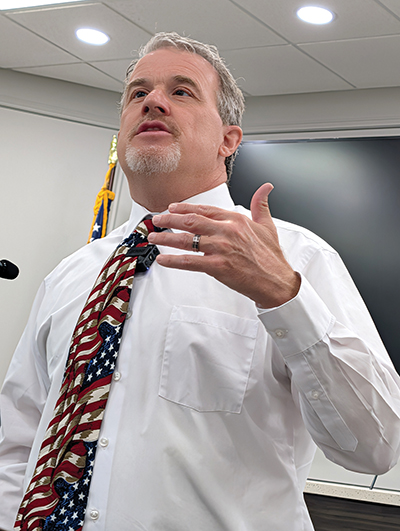
Holder
From George Washington to John Quincy Adams, Farragut Museum’s History Hour’s presentation Tuesday, June 23 in Farragut Town Hall by author, history professor,
radio host and speaker Tim Holder, shed insights on the first seven men who shaped the country.
Introduced by former Farragut Vice Mayor Dot LaMarche, Holder said, “Since we are celebrating the 250th birthday of the birth of the country,
I’m going to tell stories about some of our founding fathers.”
The first presidents “were all, in some way, involved with the Revolutionary War,” he said. “I like telling stories that have a point.”
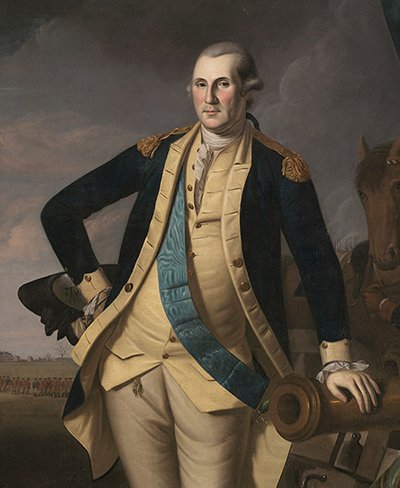
The first president, Washington, standing at 6 feet, 3 inches from Virginia, was the general who led the American army during the revolution then led the country through its early years after the war.
“You probably remember when he was the commander and chief of the Revolutionary War, the deck was really stacked against him,” Holder said of Washington.
“He really struggled to get [the soldiers] paid and make sure they had supplies,” Holder added.
“There’s a great lesson in adversity from the life and career of George Washington,” he said. “He simply refused to quit.”
The second president, John Adams “was a guy who, if you looked at his career, by any fair measurement you might presume, this guy was wildly successful,” the speaker said. “He was known as the Atlas of the American Revolution. He carried the whole thing on his shoulders.
“When he was in the Continental Congress during the Revolutionary War, he served on 25 different committees to help the war effort.
“He was on the committee to write the Declaration of Independence,” Holder said. “He was part of the team that went to France to get the French to join the Revolution.
“Yet, as an adult, he’s miserable a whole lot of the time because he’s so focused on other people and their success that he really struggles with jealousy,” Holder said.
Adams’ biggest point of jealousy was at the next president, Thomas Jefferson, who was credited for writing the Declaration of Independence and bought the Louisiana Territory, which doubled the size of the United States and removed France from North America as a potential threat.
Holder said Jefferson, who served eight years, was “incredibly charismatic.”
The fourth president, James Madison from colonial Virginia, was called “Father of the Constitution” because he helped write it.
He tried to join the Virginia militia but he was small, 5 feet, 5 inches and 100 pounds with health issues.
“He could not stand up to the demands of the life of a soldier,” so he decided to make his mark with his mind,” Holder said.
Fifth president, James Monroe, established the Monroe Doctrine to keep European countries from interfering in Latin America, which had just gained its independence from powers of Europe.
“The Monroe Doctrine said if any of those European powers try to come back to Latin America and reconquer part of it, we’re going to fight them,” Holder said. “This was a radical departure from the first four presidents,” who favored neutrality.
"Monroe was hopelessly out of fashion, but he shows respect for tradition while making a big, bold change when necessary," Hader said.
John Quincy Adams, the sixth president, was the first U.S. president who was the son of a former president.
“He was a diplomat for years in Europe, knew seven different languages. Super smart,” Holder said.
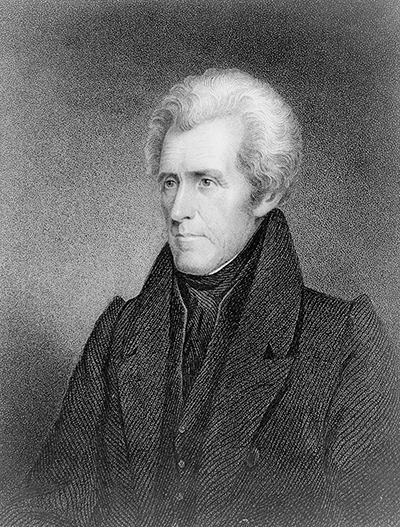
The seventh president was Andrew Jackson of Tennessee.
“Well before Andrew Jackson was famous as a president and a war hero in the War of 1812, going all the way back to the Revolutionary War, you might remember that little Andrew Jackson, as a 13-year-old boy was delivering messages for the patriots,” Holder related. “The Red Coats captured him and his brother. He’s in this tent and a British officer comes in and says, ‘Shine my boots!’
“And little Andrew Jackson says ‘no,’ and the officer takes the flat part of his sword and he strikes Jackson, He raises his hand up to protect his face, wound up with scars and proudly carried those scars for the rest of his life,” Holder said. “It says something about the spunk and determination of Jackson as a little boy that he was going to be that defiant.”
Later, Jackson got his start as a lawyer, not so much as a student of law as a guy who liked to fight and argue, the speaker observed.
Jackson was rumored to have been involved in as many as 100 duels, but historians believe he only participated in five to 13 and fought in only two true duels.